
TABLE OF CONTENTS
- How Mobile Apps Are Redefining Customer Experience For U.S. Businesses
- Top Mobile App Development Trends In 2026
- AI Chatbots For Mobile Apps
- Custom Mobile App Development Over Generic Solutions
- Cross-Platform App Development For Faster Market Reach
- Privacy-First Mobile App Design
- Key Features Every Mobile App Should Have In 2026
- Industry-Specific Mobile App Trends
- Common Mobile App Development Mistakes U.S. Businesses Should Avoid
- How to Choose The Best Mobile Application Development Company
- Why Investing In Mobile Apps In 2026 Matters
Mobile apps are no longer mere digital extensions; they have become a crucial part of the business. From sales and customer service to marketing and data collection, mobile applications have started to affect almost all areas of customer engagement. U.S. businesses are now taking a more informed approach to mobile applications, focusing on performance, security, and scalability.
What’s changed? Customers demand speed, personalization, and transparency. Businesses that don’t deliver these through their mobile apps will lose customers in seconds. This is why working with the right Mobile App Development Company and understanding current trends is critical for staying competitive.
This blog breaks down what influences the development of mobile applications in 2026 and how U.S. business owners can make better decisions.
How Mobile Apps Are Redefining Customer Experience For U.S. Businesses
Mobile applications have changed how customers interact with businesses and build long-term loyalty. Instead of having to navigate between platforms, they are demanding a fast and personalized one-stop experience.
The following are some of the most significant ways in which mobile applications have improved customer experience:
- Faster access to products and services
- Personalized content based on user behavior
- Easy communication through in-app support
- Secure and quick payment options
- Real-time notifications and updates
These advantages make it very clear how mobile apps simplify customer experiences for businesses competing in digital-first sectors where convenience has a direct impact on purchasing decisions.
Top Mobile App Development Trends In 2026
AI Chatbots For Mobile Apps
In 2026, AI chatbots are smarter and more effective than ever, and businesses aren’t just employing them to answer FAQs.
How chatbots are being used:
- 24/7 customer support without human delays
- Guided product or service selection
- Automated appointment booking and reminders
- Order tracking and issue resolution
The usage of AI Chatbots for mobile apps will assist in cutting down the operational costs of businesses while ensuring a consistent and instant support system.
Custom Mobile App Development Over Generic Solutions
Template-based apps often limit flexibility and performance. Businesses now prefer personalized apps because generic solutions no longer meet real operational needs.
Why companies prefer custom apps:
- Full control over features and UI
- Better scalability as the business grows
- Improved safety and protection of data
- Ease of integration with internal utilities
With this paradigm shift in Custom Mobile App Development, businesses can now create apps according to their brand needs rather than developing their business processes around software limitations.
Cross-Platform App Development For Faster Market Reach
The launch on both iOS and Android platforms quickly is one of the primary concerns in 2026. Cross-platform development enables faster launches while reducing overall development time.
The key advantages of cross-platform apps are:
- Faster time-to-market
- Lower development and maintenance costs
- Consistent user experience across devices
- Easier updates and feature rollouts
Understanding the difference between Hybrid and Native Mobile Apps enables brands to find the right method of development for their performance, budget, and scaling requirements.
Privacy-First Mobile App Design
Data privacy is now a make-or-break feature for users. For business, the focus has to be on trust in order to retain its customers.
Privacy-first design focuses on:
- Minimal data collection
- Transparent consent policies
- Secure authentication methods
- Compliance with U.S. data regulations
Apps that respect user privacy terms minimize legal risks and gain long-term market credibility.
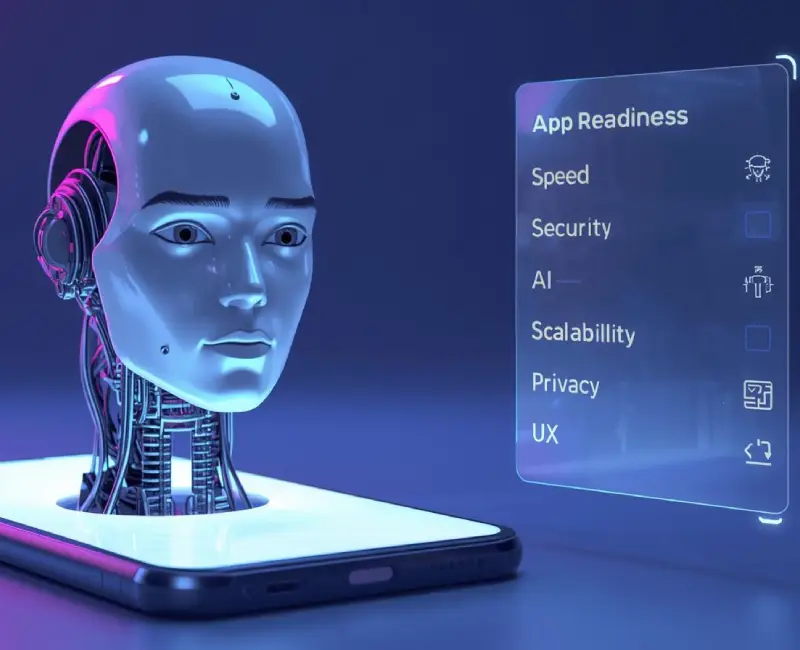
Is Your App Idea Fit For 2026 or Stuck in 2022?
Key Features Every Mobile App Should Have In 2026
Designing modern applications requires a balance between strong functionality and simplicity, without overwhelming users.
The essential features of the application are:
Fast loading, smooth performance: Prevents users from abandoning the app due to lag, delays, or crashes.
Easy to use, intuitive navigation: Helps users find what they need without instructions or confusion.
Secure login options (biometric or OTP): Protects user data and makes sign-ins faster and much easier.
Personalization settings: Allows content, notifications, and preferences to be customized to the interests of the users.
Offline access for basic functions: Allows necessary functionalities to work even in cases of low or no internet connection.
Smart push notifications: Offers significant news and updates at the best time without overwhelming users.
These are the key features every mobile app should have in order to meet user expectations and support long-term engagement.
Industry-Specific Mobile App Trends
Customer-Facing Businesses
Retail stores, real estate firms, hospitality brands, and service marketplaces are some of the customer-facing businesses that consider mobile apps to be their leverage point for delivering fast, visual, and convenient user experiences.
Common trends:
- One-click checkout and booking
- Personalized recommendations
- Loyalty programs and rewards
- Real-time availability updates
There is a constant growing demand for custom Real Estate Mobile App development, as businesses strive to provide a hassle-free and mobile-first browsing and buying experience.
Service-Based and Professional Businesses
Service-based and professional businesses such as educational institutions, consulting firms, legal services, and logistics companies rely on mobile apps to manage operations and client communication.
These apps prioritize efficiency, trust, and data security.
Popular features include:
- Appointment scheduling
- Secure document sharing
- Progress tracking dashboards
- Automated reminders and alerts
These apps streamline the process and also improve direct communication with customers.
Platform-Based and Marketplace Models
Platform-based and marketplace models like fintech applications, booking services, subscription services, and on-demand marketplaces link various users within a single ecosystem.
These apps focus on scalability, trust mechanisms, and system stability.
Key focus areas:
- Secure payment systems
- User verification processes
- Subscription and billing management
- Ratings and review systems
In most instances, Shopify App Development is applied to enhance marketplace functionality, automate workflows, or enable subscription-based commerce on these marketplaces.
These marketplaces depend on performance stability to retain the trust of their users.
Common Mobile App Development Mistakes U.S. Businesses Should Avoid
Many businesses struggle because of avoidable mistakes during development.
Common errors include:
- Skipping user research
- Overloading the app with unnecessary features
- Ignoring performance optimization
- Poor onboarding experience
- Lack of post-launch updates
By not making these same mistakes, companies can save themselves time, money, and customers.
How to Choose The Best Mobile Application Development Company
Choosing the right app development company is one of the most significant factors that decide whether your app will make it or break it in the market. Industry experience, quality of work, communication, post-launch support services, cost transparency, and feedback are some considerations that business owners must weigh before making a decision. An expert team works on both the technical side and business strategy, ensuring the app is scalable, secure, and user-focused from day one.
Through collaboration with the best mobile application development company, businesses can be rest assured that the app is in line with the long-term strategy and prevent costly re-work or issues in the future.
Why Investing In Mobile Apps In 2026 Matters
Mobile applications have transformed into a significant business investment in the United States across different industries. Indeed, those businesses that put more focus on user experience, privacy, scalability, and the needs of specific industries will more likely be ahead in a mobile-first market. With the increasing importance of eCommerce Mobile App Development, mobile applications have become a key determining factor in overall engagement and customer loyalty.
Choosing the right app development partner at the right time decides on long-term success. This is where companies such as Site It Now are aiming to develop scalable and performance-oriented mobile apps that align with actual business objectives instead of following the latest trends.
If you’re seeking to create or upgrade your mobile app, then work with us. We focus on technology as well as business strategy, working in coordination on solutions that elevate the growth of your business.
Frequently Asked Questions (FAQs)
In 2026, mobile apps are focusing on AI-driven automation, privacy-first design, and cross-platform development. Businesses are also moving toward industry-specific apps that offer better performance and scale as they grow.
The mobile apps can make it simpler and quicker for businesses to interact with their customers. They provide fast accessibility to service, seamless communications, and consistent interactions, which can help increase trust and satisfaction as well as loyalty.
A good business app must be fast, easy to use, and secure. Key functionalities include easy navigation with secure login, personalized offline access, and advanced push notifications.
Yes. App features depend on user behavior, data sensitivity, and business operations. Customer-focused, service-based, and platform-driven businesses all need different app functionalities.
Businesses should look for a partner with strong technical skills, proven industry experience, crystal clear communication during development, scalability planning, and reliable post-launch support.