TABLE OF CONTENTS
- Understanding Semantic Search
- Why Search Engines Had To Change
- How Semantic Search Actually Works
- How Semantic Search Is Changing SEO In 2026
- Keywords Now Play a Supporting Role
- User Intent Has Become The Primary Ranking Signal
- Topic Clusters and Topical Authority
- E-E-A-T and Trust-Based Rankings
- Why Content Structure Matters In a Semantic World
- Conversational and Voice Search Are Shaping Content
- The Role Of AI In Modern SEO
- Why Structured Data Matters More Than Ever
- Rethinking Backlinks In a Semantic SEO World
- Measuring SEO Success Beyond Rankings
- How Semantic Search Impacts Different Industries
- Key SEO Strategies For 2026
- Choosing The Right SEO Partner In 2026
- How Site It Now Is Shaping The Future Of SEO In 2026
Search engines are no longer just about identifying the keywords on the web page. Over the years, they’ve changed into systems that try to understand people, how they think, how they ask questions, and what kind of answers actually help them move forward.
In 2026, SEO is no longer about technical tricks or placing keywords in the “right” spots. It’s about meaning, intent, and trust. Businesses working with a search engine optimization company are discovering that visibility is now not just about how optimized content appears on the surface, but also about an understanding of real people and their needs.
This shift is driven by semantic search, and it has quietly rewritten how SEO works.
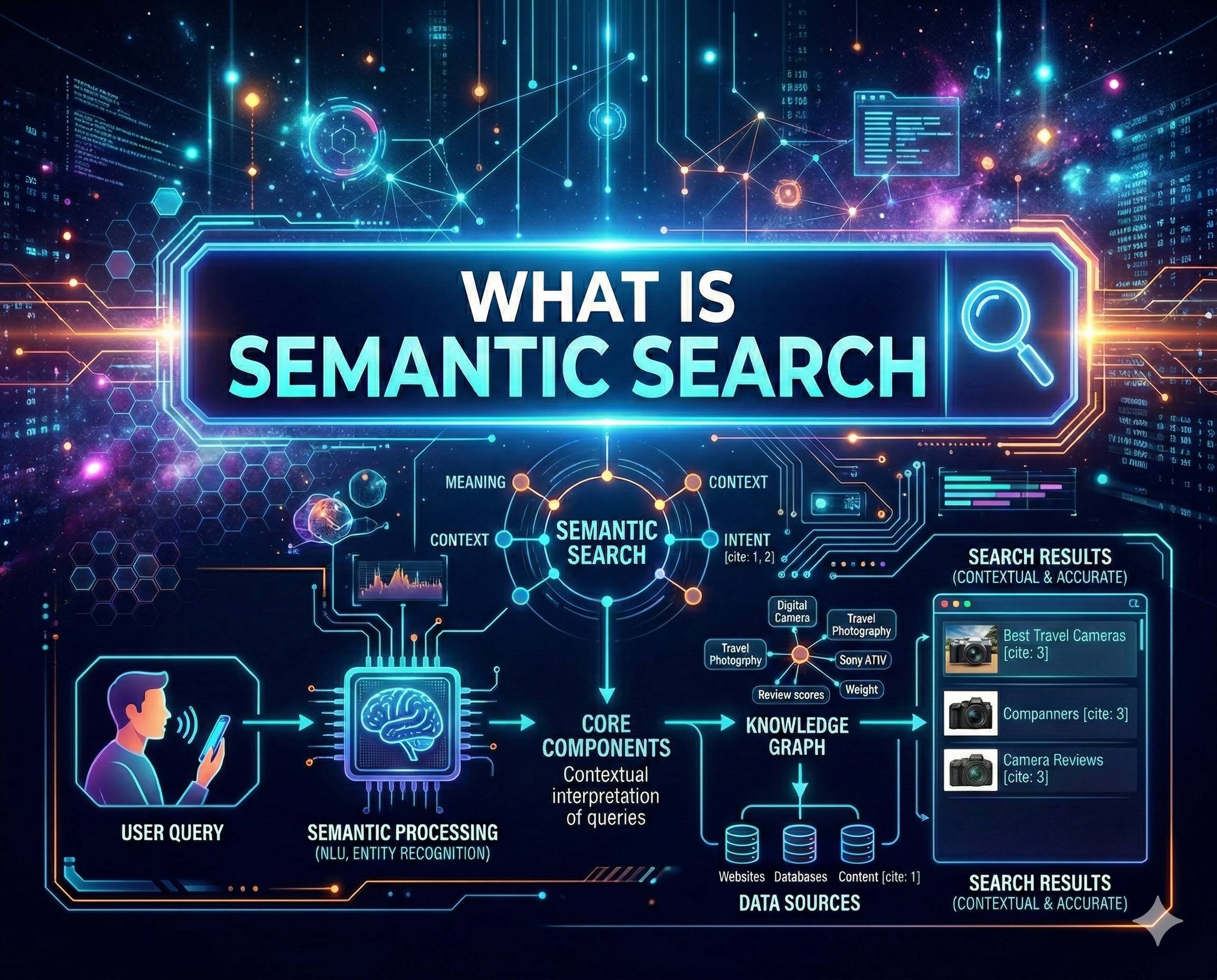
Understanding Semantic Search
At its simplest, semantic search means this:
Search engines attempt to understand what a person actually meant by the words typed.
The search engines of the past worked mostly by combining keywords. If a website repeated a term frequently enough, it would rank even if it wasn’t able to explain the subject well. This is why they used to focus a lot on how to rank higher on search engines through repetition, rather than clarity.
Today, search engines attempt to figure out:
- What exactly is this user trying to achieve?
- What is the issue they’re trying to fix?
- What would they actually want to know?
- Which source knows this subject matter best?
This is why two people can search using entirely different phrases and receive similar results. The search engine is answering intent, not text.
Why Search Engines Had To Change
The old keyword-based model stopped working for one simple reason: it wasn’t very helpful.
As search behavior evolved, people began:
- Asking full questions instead of typing fragments
- Using voice search and conversational language
- Expecting clear, direct answers
- Losing patience with vague or padded content
Search engines had two choices: stay keyword-based and frustrate users, or learn how humans communicate and adapt. Semantic search is the result of that adaptation.
How Semantic Search Actually Works
Modern search engines rely heavily on AI and advanced language models that understand how words relate to each other behind the scenes.
Instead of reading a page like a checklist of keywords, they analyze:
- Context across the entire page
- Relationships between ideas
- Synonyms and implied meaning
- How well the content answers the query
This is why content that explains things clearly now performs better than content that tries to “optimize” aggressively.
The system isn’t asking, “Does this page contain the phrase?”
It’s asking, “Does this page understand the topic?”
This same understanding helps Google determine what site names are in Google Search Results, ensuring accuracy based on clarity and authority.
How Semantic Search Is Changing SEO In 2026
SEO is no longer about controlling signals. It’s about earning relevance.
Keywords Now Play a Supporting Role
Keywords are still important; however, they do not determine the rankings. Their role is to indicate relevancy, not control content.
Modern SEO content is most effective when it:
- Explains topics clearly
- Uses related terms naturally
- Focuses on understanding rather than repetition
This also supports long-term efforts on how to improve domain authority, because trust is built through usefulness, not shortcuts.
User Intent Has Become The Primary Ranking Signal
Intent is now one of the strongest factors behind visibility.
Search engines evaluate whether the content:
- Answers the real question behind the search
- Solves the user’s problem
- Matches what the search is actually trying to achieve
A page can be well-written and still fail if it doesn’t align with intent. This is especially clear in AI-driven environments like what is Google SGE, where usefulness matters more than effort.
Topic Clusters and Topical Authority
Search engines no longer judge pages in isolation. They evaluate websites as knowledge sources.
Websites perform better when they:
- Cover topics in depth
- Publish connected content
- Show consistency over time
This is why the importance of blogs for SEO rankings continues to grow. Blogs help demonstrate expertise and build credibility naturally.
E-E-A-T and Trust-Based Rankings
Semantic search has made trust unavoidable.
Search engines now look at:
- Experience behind the content
- Expertise demonstrated
- Authority of the source
- Accuracy and reliability
This is particularly relevant in niches such as SEO Leads For General Contractors, where authority influences decisions more than aggressive tactics.
Is Your SEO Strategy Built For Semantic Search?
Why Content Structure Matters In a Semantic World
Understanding meaning isn’t just about words; it’s also about presentation.
Semantic search engines prefer content that is easy to read and easy to follow.
Well-structured content usually includes:
- Logical flow between sections
- Clear subheadings
- Short, focused paragraphs
- Lists only where they genuinely add clarity
This improves both user experience and AI comprehension, whether the topic is a broad strategy or practical use cases like SEO for plumbers.
Conversational and Voice Search Are Shaping Content
Search behavior has become more natural. People search the way they speak, which is why understanding What Is Voice Search Optimization has become increasingly important in modern SEO.
This shift means content must:
- Use conversational language
- Answer questions directly
- Anticipate follow-up queries
Semantic search favors content that is more like an answer or an explanation than a technical documentation.
The Role of AI In Modern SEO
AI is now deeply built into how search engines work. This is often explained when people ask What Is AI SEO, which reflects how systems evaluate meaning rather than just matching words.
AI supports:
- Intent interpretation
- Content quality evaluation
- Predictive understanding of user needs
- AI-generated summaries and answers
Because of this, SEO content must be clear, trustworthy, and genuinely helpful.
Why Structured Data Matters More Than Ever
Structured data is a translation tool and helps search engines comprehend the presentation of the particular content.
Using schema markup improves:
- Content interpretation
- Eligibility for rich results
- Knowledge panel visibility
This is especially valuable for service-based businesses, including why auto repair shops should do SEO, where a clear service context influences trust and conversions.
Rethinking Backlinks In a Semantic SEO World
Backlinks are still important, but quality has come to matter much more than quantity.
Instead, search engines evaluate what are quality SEO backlinks on the basis of relevance and authority and not just the quantity.
Measuring SEO Success Beyond Rankings
Moreover, the SEO performance measure is not only in relation to where it ranks within the search results page in 2026.
True SEO Results include:
- Visibility in AI-generated answers
- Engagement and time on page
- Lead quality and conversions
This broader view also changes how businesses think about what is off-page seo in a semantic-first world.
How Semantic Search Impacts Different Industries
Semantic search continues to affect all industries. However, its impact may vary by industry.
Industry-based content is most successful when:
- Clearly explains services
- Answers common customer questions
- Displays real-world expertise
When content matches exactly how people search and make their decisions, visibility improves organically.
For instance, this is usually discussed while explaining how CPA firms can benefit from SEO, even though the principles are the same everywhere.
Key SEO Strategies For 2026
To succeed in a semantic-first world, companies need to concentrate on:
- Aligning content with real user intent
- Building topical authority
- Structuring content clearly
- Measuring performance through engagement
This approach is also helpful for businesses evaluating how to hire the best eCommerce SEO company
Choosing The Right SEO Partner In 2026
In a meaning-driven SEO world, knowledge matters more than tactics.
Knowing how to find the best SEO company means more than just looking at the promises they make and having a focus on the long game.
A good SEO partner knows:
- Semantic search principles
- Intent-based content strategy
- Authority building over time
- Long-term sustainable growth
They don’t pursue trends and shortcuts; they choose the building of understanding, trust, and relevance in a fully aligned manner that reflects how a search engine and a human think.
SEO in the modern age is about strategy, not shortcuts.
How Site It Now Is Shaping The Future Of SEO In 2026
Semantic search has made SEO a meaning-first industry. Understanding how semantic search is rewriting SEO in 2026 is essential for any business that wants long-term sustainability. This isn’t a trend, it’s the foundation of modern search.
This is why Site It Now stands apart. With a focus on intent, structure, and long-term authority, Site It Now helps businesses align SEO with the way search engines, as well as humans, think.
SEO is no longer about outsmarting algorithms.
It’s about being useful enough to deserve visibility.
Ready to future-proof your SEO? Call Site It Now at (312) 442-0352 or email Contact@siteitnow.com
Frequently Asked Questions (FAQs) About Semantic Search